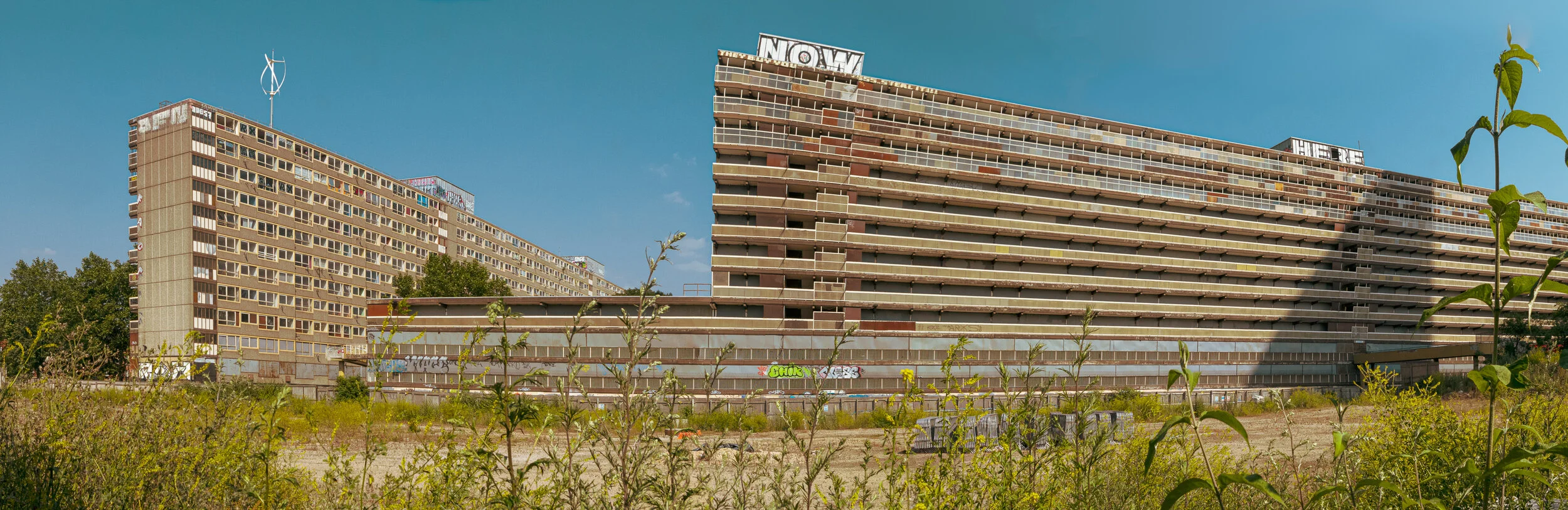
The Heygate Estate was a large housing estate in Walworth, Southwark, South London, comprising 1,214 homes built in a Neo-Brutalist architectural aesthetic. It was built in 1971–74 and demolished in 2011–14 as part of the regeneration of Elephant & Castle.
The concept behind the housing estate was of a modern living environment. Tall concrete blocks would dwarf smaller blocks, surrounding central communal gardens. The architect, Tim Tinker, wanted to link all areas of the estate via concrete bridges, so there was no need for residents to walk on pavements or along roads. It was even planned to build bridges to the neighbouring Aylesbury Estate, further south in Walworth.
Concrete blocks and walkways


In the beginning, the estate was a popular place to live, with large spacious apartments, but it later developed a reputation for crime and violence which was disputed by residents.
In 1999 Southwark Council's Director of Regeneration Fred Manson sparked controversy when in an interview about the Elephant & Castle regeneration he claimed that "social housing generates people on low incomes coming in and that generates poor school performances, middle-class people stay away."
Plans for regeneration began and by March 2010 only 11 flats remained occupied. In February 2013 the last remaining residents on the estate appeared at a public inquiry into the Compulsory Purchase Order issued on their homes. In November 2013 the last resident was removed and all access points to the estate were closed.
Empty courtyards and gardens


By 2014 the estate had been demolished.
Before bulldozers rolled in, I seized the opportunity to jump over the fence with my camera and a friend to explore the notorious and controversial housing estate. Sadly, just as we found a way into one of the condemned buildings we were collared by security and asked to leave.
These images were captured sometime in the summer of 2013.
Graffiti, garages and street art